
Across virtually every industry, people are asking: “Will AI actually make my day-to-day work better?” In research, many methodologies rely on a hands-on, human-centered approach, something that might seem at odds with AI, like oil and water.
So what does it look like in practice? Is AI enhancing human interactions or getting in the way? We are at a pivotal moment in the AI revolution, where it is proving to be a practical, game-changing tool…even transforming the qualitative research space.
AI as an Extension of Your Research Team
When deployed thoughtfully, AI can act like an extension of your team. It can take on time-consuming administrative tasks, freeing researchers to focus on the aspects of their work that truly add value. This is particularly important for qualitative research, which has historically required significant time, effort, and resources.
With AI, processes that used to take days, or even months, can now be completed faster and more efficiently. One of the biggest historical roadblocks in qualitative research has been recruitment. Finding the right participants, verifying their relevance, and keeping them engaged can be time-consuming and costly. Today, AI is helping overcome that challenge by helping research teams identify and engage the right participants for their unique needs. This ensures that feedback comes from the people who truly matter, reducing bias and improving the quality of insights.
By helping to manage the repetitive and time-intensive tasks, AI is allowing researchers to dedicate their energy to the creative and strategic work that drives real impact, making qualitative research more powerful than ever before.
Making Qualitative Research Scalable
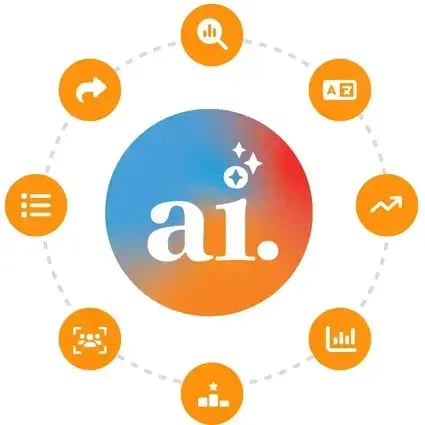
Before AI, qualitative research was often viewed as costly, time-consuming, and resource-intensive. Today, platforms like Alida are making it accessible and scalable, even for small teams or solo researchers. By thoughtfully integrating AI across the entire qualitative research cycle, teams can gather richer, more nuanced data faster than ever. Some of Alida’s latest tools empowering teams to conduct AI-driven qualitative research at scale include:
- Open End Summarization saves hours of analysis and quickly identifies distinct positive and negative takeaways from open-ended survey responses.
- Open End Follow-Up efficiently captures more insightful, higher-quality open-ended responses with integrated follow-up prompts.
- Sentiment Analysis rapidly surfaces insights and identifies trends with human-quality sentiment analysis and automated topic generation.
- Response Translation eliminates barriers to uncovering meaningful insights with automated unification of multi-language responses into a single analysis language.
- Video Analysis quickly surfaces insights from video faster with instant transcription, translation, tagging, and clip generation.
The Growing Importance of Qualitative Research
For years, qualitative research sometimes took a backseat to its faster-to-run counterpart, quantitative research. But in an era of overwhelming data and rising sample-quality challenges, qualitative insights are essential. Bots, disengaged participants, and gamified responses have made it more important than ever to connect with verified, trusted users.
While synthetic data is projected to grow as a research supplement over the coming years, it should complement, not replace, feedback from real customers. Real and trusted voices are irreplaceable, providing context, depth, and nuance that no algorithm alone can deliver.
The Future of Qualitative Research with AI
As AI continues to evolve, the possibilities for qualitative research are only beginning to be realized. It’s no longer about choosing between human insight and technological efficiency, AI allows us to have both. By thoughtfully integrating AI into the research process, we can streamline workflows, scale studies, and uncover richer, more authentic insights.
The real opportunity now lies in how we embrace AI as a teammate. While it may seem counterintuitive, AI is actually helping us become more human in our research, empowering teams to capture richer, more nuanced insights. The challenge is in thoughtful application. When we collaborate with AI with purpose and intention, it becomes more than just a tool. It can become a trusted partner in uncovering the voices, needs, and truths of our customers.