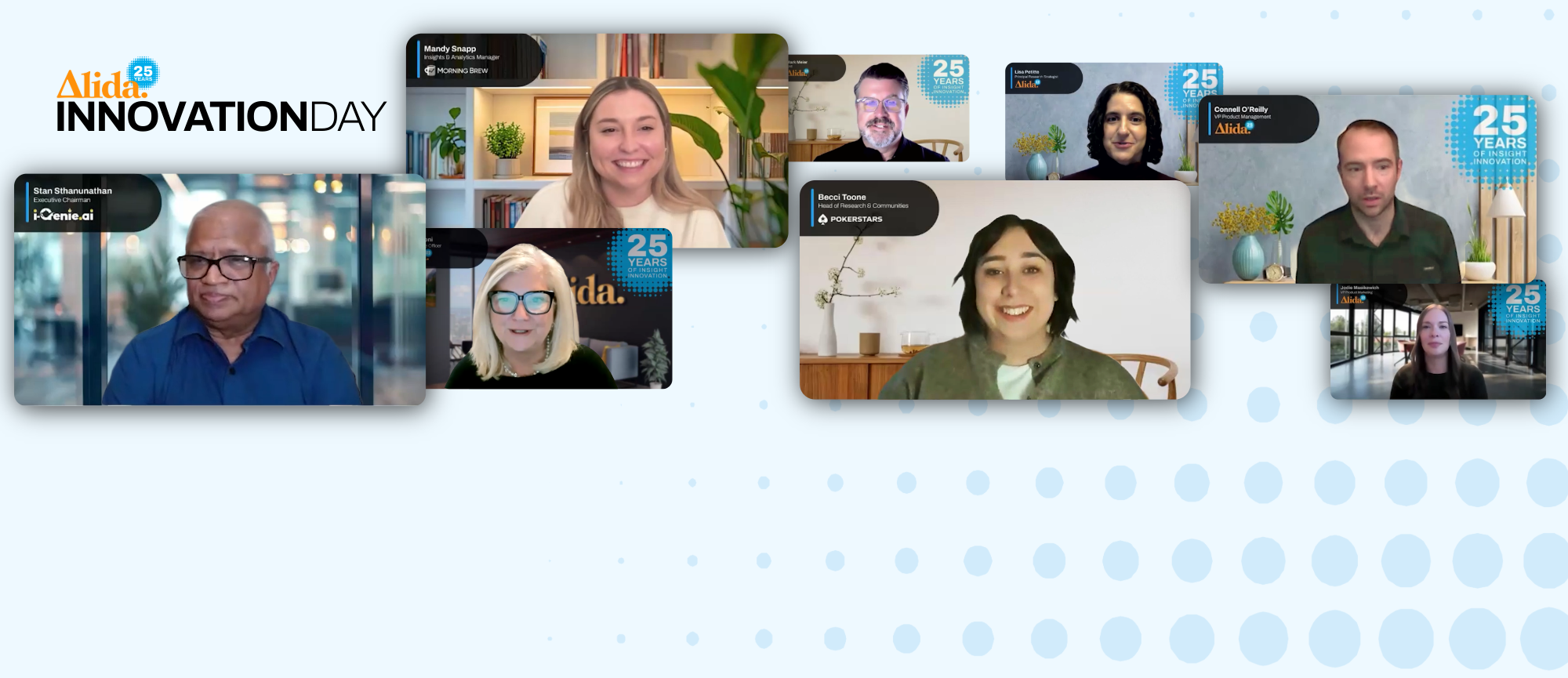

As 2025 comes to a close, teams everywhere are naturally asking the same question: what’s next? This year pushed researchers to think differently, to experiment, and to find new ways of elevating the customer voice. Across our customers, our product, and the broader insights community, we observed several key trends that stood out, signaling a clear shift in how organizations approach research.
Here are the five research trends from 2025 that captured our attention, shaped the way teams work, and offer a glimpse of where insights are headed in 2026:
1. Sample Quality Will Determine Research Success
If you are trying to make customer-centric decisions, poor sample quality is one of the easiest ways to sabotage your efforts. General population samples alone often will not get you there. By investing in a real community of customers, organizations can dramatically improve the quality and relevance of insights. Building trust, fostering engagement, and scaling impact across teams are all possible when decisions are informed by the people who matter most. Your real users.
At Alida’s recent Innovation Day, some of the world’s leading brands including Aristocrat, Financial Times, Flutter International | PokerStars, Highmark Inc., Morning Brew, Saks Global, SCA, Paramount, Roku, Tubi, and Ulta Beauty, emphasized that their community was the key to better, more innovative, decision-making. Building a community ensured access to higher-quality samples from real, vetted, and engaged users of their brand, making it the most reliable way to generate insights that truly matter.
2. Research Is No Longer Just For Researchers
Data democratization has been a buzzword in the research ecosystem for years, but the gap is becoming increasingly clear between organizations that do it well and those that have yet to make it a priority.With the right platform that thoughtfully incorporates the power of AI, businesses can elevate how insights are discovered, shared, and acted upon across every team. The future of research needs to be accessible, collaborative, and embedded deeply into how organizations work.
For example, Ulta Beauty deployed a multi-modal research ecosystem centered around the Ulta Beauty Connection community. Insights from this community were made fully accessible to over 200 associates across the organization, fostering collaboration with executive leadership, Product, Technology, UX, Merchandising, and Marketing teams. This approach allowed Ulta Beauty to embed genuine guest empathy into every layer of their decision-making.
3. Longitudinal Research Enables Always-On Innovation
Random, one-off surveys are not the gateway to innovation. Today’s research landscape demands a balance between long-term strategic initiatives and urgent, unplanned needs, because last-minute requests are an inevitable part of business. The organizations that succeed are the ones that have a research platform partner enabling both agility and consistency in a single, integrated approach. Longitudinal, always-on research practices, such as customer communities, provide that balance, allowing teams to plan strategically while responding quickly when the moment calls for it.
SCA, Australia’s leading home for radio and audio content, has been a pioneer in this space for over a decade. By building and sustaining an organization-wide research ecosystem around a listener community, SCA ensures that every team stays connected to audience attitudes, experiences, and reactions to content. This approach powers both long-term strategic initiatives, like the Mood Monitor project tracking Australians’ moods and concerns for 12 years, and rapid pulse checks that capture emerging trends and immediate user needs.
4. Combining Methods Elevates Insight
No single data type can tell the full story. The most effective research combines qualitative and quantitative methods to create a holistic view of the customer. Quantitative feedback delivers speed, scale, and clarity, while qualitative approaches reveal tone, emotion, and motivation. Together, they provide a complete understanding of both the “what” and the “why” behind behavior.
The same principle applies to sample too. There is no one-size-fits-all audience for research. Sometimes you need input from your own customers to answer a targeted question about a product or marketing initiative. Other times, a general population sample is essential for a broader perspective, such as entering a new market or testing a completely new concept. A modern research toolkit gives teams access to both types of audiences and the flexibility to move seamlessly between them, ensuring the right insights come from the right people.
In 2025, Aristocrat extended its audience reach by incorporating external samples into its research strategy. For a recent CX study, the team collected more than 200 responses in under an hour despite complex targeting requirements. Access to both community members and external respondents has proven transformative, providing a cost-effective way to engage players beyond traditional CRMs. Aristocrat has also explored innovative applications of external samples, including inviting respondents to join their customer community or participate in follow-up interviews, creating a seamless bridge between quantitative insights, recruitment, and qualitative research.
5. Authenticity Remains King
The organizations that will thrive in research are those that pair digital innovation with authenticity. Capturing attention in a fast-moving world is important, but even more crucial is showing consumers that they are part of something bigger than a product or service.
AI is everywhere, and for good reason. It is advancing processes, streamlining administrative tasks, and scaling qualitative research in ways never seen before, making it possible to conduct more genuine, customer-centric research at scale. Synthetic data is gaining traction, and while it has its place, it should never be the sole source of feedback guiding major business decisions. The essence of research remains real people. AI should make it easier to reach and engage customers, capture their feedback, and analyze insights, not replace the human voice.
Emily Fischer from Paramount highlights, "Story is a universal human need. It is the thread that connects us across time and place. The most powerful stories begin by listening to the voices of our audience, and their perspectives ensure that what we deliver resonates deeply."
Consumers do not want to be researched, they want to be heard. They reward transparency, dialogue, and honesty. Creating experiences that feel human and reciprocal is essential for building long-term trust.
Looking Ahead
If 2025 showed us anything, it is that the most successful research teams are the ones prioritizing quality, agility, and authenticity. Organizations that invest in real customer communities, make research accessible across teams, adopt always-on longitudinal approaches, leverage multiple methods and audiences, and prioritize the human voice are the ones moving the fastest and making the smartest decisions.
As we move into 2026, these trends offer a roadmap for innovation. Teams that embrace them will not only gather more meaningful insights, but also embed customer understanding into every layer of their business. The future belongs to those that can act quickly without sacrificing rigor, scale without losing authenticity, and innovate with their customer at the heart of every decision.
.png?width=1024&height=425&name=Innovation%20Day%202025-5-Internal%20email%20image%20(1).png)