

When it comes to gathering feedback, no single source of data can give you the full picture. Yet many tend to lean heavily on one type of research approach, when the real impact comes from knowing how and when to combine multiple methods.
If you plotted research sample approaches on a chart, you could imagine two endpoints. On one end, there’s the general population sample: people who have no prior relationship with your brand. On the other, there are customer communities: advocates of your brand who know your products and have a history with you. Both unbranded and branded research can include general population or customer audiences. The difference is that unbranded means participants are unaware of the sponsoring company or brand, while branded means they know. Often, companies running unbranded research will tend to use general population samples while branded research will lean towards involving customers, but it’s flexible, and you should choose your mix based on your unique research needs. Most research doesn’t, and shouldn’t, sit entirely at one end of the “sample spectrum”. The best research lives between these points, shifting closer to one or the other depending on your goals.
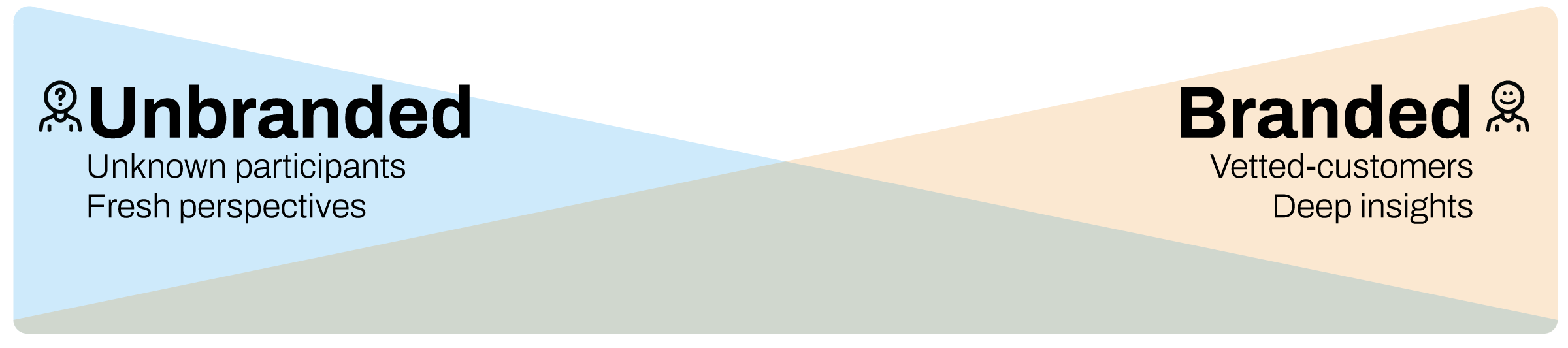
Using only one input is like trying to piece together a puzzle with only one piece in place.You’ll never be able to see the bigger picture. Unbranded sample brings fresh perspectives, making it essential when you’re testing a new brand concept, exploring an unfamiliar market, or learning about a buyer segment you haven’t reached yet. While incentives are often part of recruitment for these audiences, the investment pays off in targeted, high-quality data.
Branded communities, on the other hand, provide context-rich insights from people who already know and value your products, making them ideal for refining existing offerings, testing loyalty programs, or exploring new product and marketing ideas with an informed lens. The beauty of branded research lies in that pre-existing vested interest, participants are deeply motivated to share their time and provide rich, thoughtful feedback. Each plays a distinct role, and together they unlock the most valuable truths.
Seeing the Balance in Action: How lululemon Blended Branded and Unbranded Insights
When lululemon was preparing to enter the footwear category in 2020, they knew they needed a deep understanding of both the competitive landscape and their consumer needs.
Before commissioning large-scale global positioning research, they began with their branded customer community via the lululemon Feedback Forum. This approach allowed them to explore and establish hypotheses around the customer journey and key drivers of footwear purchases. These early insights helped shape the design of their unbranded research, ensuring it was targeted, relevant, and grounded in an understanding of common perceptions, preferences, and buying behaviours.
After completing their external research with their unbranded sample community, lululemon returned to their Feedback Forum to go deeper, uncovering the emotional connections customers have with footwear, and identifying not only the functional benefits but also the in-context emotional value.
By moving seamlessly between branded and unbranded audiences, lululemon was able to build a layered understanding of culture, consumer, and the footwear industry at large. This combined perspective ultimately helped them carve out a distinctive position in a crowded market.
Great research isn’t about picking a side. It’s about being able to move fluidly along the research sample spectrum, and adjusting your mix depending on the decision you need to make about your business. If you’re launching a new product in an untapped market, you might begin closer to the general population side of the range to test awareness and first impressions, then shift toward a customer focused audience for deeper refinement informed by real customers. If you’re exploring ways to improve customer retention, you might start with your community and then validate ideas with unknown participants to see if they have broader appeal.
The key is to design a research program that allows you to access the full range of participants. That flexibility turns research from a static process into a strategic advantage. You’re no longer locked into a single viewpoint, you can pull from the right audience at the right time to answer your most important questions. One way to achieve this is by choosing a research platform partner that offers a variety of sample options within a single solution. This eliminates the need for multiple point tools, reduces the risk of siloed data, and ensures all audience types are available at your fingertips.
Research is rarely black and white. Whether your next study leans toward the general population, customers, or somewhere in between, the value comes from blending perspectives. The more complete the picture, the smarter your decisions.